
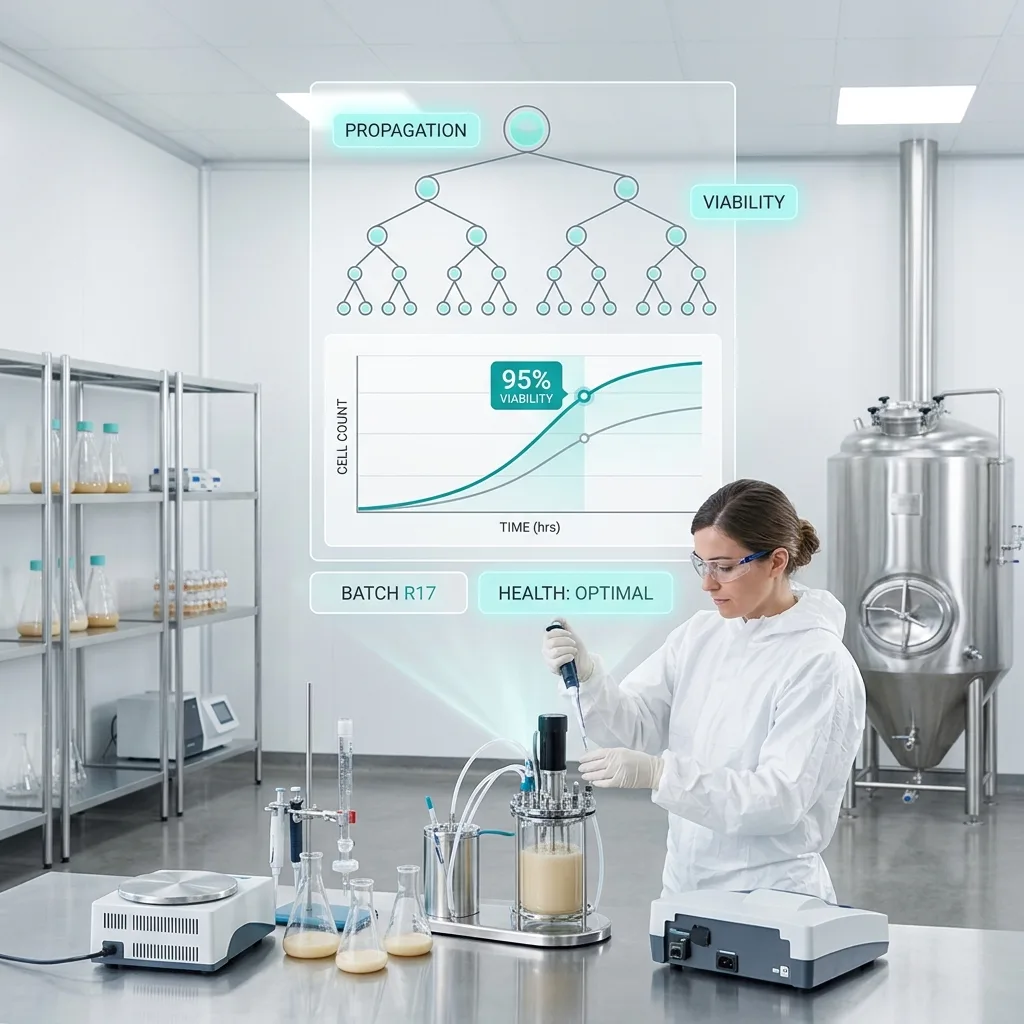
A bakery receives dried yeast with 70% viability (aged 6 months storage). Result: Poor rise (weak fermentation), inconsistent bread volume, oven spring unreliable. Production variability high. Customer complaints increase.
A modern bakery maintains fresh yeast cultures (95% viability, propagated weekly). Result: Consistent rise every bake, reliable oven spring, premium bread quality. Production consistency excellent. Repeat customer rate increases 85%.
Yeast viability and culture management directly impact fermentation reliability and product consistency.
The Yeast Viability Framework
Why Yeast Viability Critical:
Viability = percentage of living cells capable of fermentation
- Dead cells: Cannot ferment, wasted inoculum
- Low viability: Slow fermentation, unpredictable results
- High viability: Fast, predictable fermentation
Yeast Species (Common):
| Species | Application | Optimal Temp | Viability Loss/Month |
|---|---|---|---|
| Saccharomyces cerevisiae | Brewing, baking | 20-25 degrees C | 5-8% |
| Saccharomyces pastorianus | Lager brewing | 10-15 degrees C | 3-5% |
| Candida milleri | Sourdough | 15-25 degrees C | 8-10% |
| Torulaspora delbrueckii | Wine, cider | 15-20 degrees C | 5-7% |
Viability Loss Factors
Factor 1: Temperature
Storage temperature dramatically affects viability:
| Temperature | Viability/Month | Shelf-life |
|---|---|---|
| 25 degrees C (ambient) | -10-15% loss | 2-3 months |
| 4 degrees C (refrigerated) | -3-5% loss | 6-12 months |
| -18 degrees C (frozen) | -0.5-1% loss | 2+ years |
| -80 degrees C (ultra-frozen) | -0.1% loss | 10+ years |
Implication: Frozen storage extends viability dramatically
Factor 2: Humidity
Moisture content affects cell survival:
- Dry state: Yeast dormant, cells protected
- Rehydrated: Cells active, metabolism increases
- Over-hydrated: Cells burst (osmotic stress)
Optimal Moisture: 5-8% (dried products)
Factor 3: Age
Time decreases viability:
- Fresh propagation: 95-99% viability
- 1 month storage: 90-95% viability (good)
- 3 months storage: 80-85% viability (marginal)
- 6 months storage: 70-75% viability (poor)
Factor 4: Culture Stress
Propagation conditions affect viability:
- Poor growth medium: Low viability
- Temperature stress: Damages cells
- Contamination: Kills yeast
- Over-propagation: Nutrient depletion
Viability Testing
Method 1: Methylene Blue Stain
Principle: Dead cells take up blue dye, viable cells exclude it
Procedure:
- Mix yeast suspension with methylene blue
- Incubate 5 minutes
- Count under microscope:
- Blue cells = dead
- Clear cells = viable
- Calculate: Viable % = (Clear / Total) x 100
Advantages:
- Fast (5-10 minutes)
- Simple equipment needed
- Inexpensive (under $100 setup)
Limitations:
- Manual microscopy
- Subjective counting
- Labor-intensive
Method 2: Flow Cytometry (Modern)
Equipment: Flow cytometer (expensive $50K+)
- Speed: Automated, very fast
- Accuracy: 99%+ precise
- Throughput: 1,000 cells/second
- Cost: High equipment investment
Target Viability Standards:
- Fresh culture: over 95% (excellent)
- Acceptable working: over 85% (good)
- Marginal: 75-85% (use caution)
- Unacceptable: under 75% (discard)
Culture Propagation Protocol
Step 1: Activate Culture
Purpose: Revive dormant/frozen cells
- Source: Frozen stock (-18 degrees C) or dried culture
- Rehydration: Add sterile water (warm, 25-30 degrees C)
- Wait: 15-30 minutes (cells rehydrate)
- Result: Activated cells ready for growth
Step 2: Inoculate Growth Medium
Purpose: Grow population to usable level
- Medium: Nutrient broth or wort
- Inoculum rate: 1-5% (starter to medium ratio)
- Volume: Enough for production batch
- Example: 50 mL starter to 1 L medium
Step 3: Incubate (Grow)
Conditions:
- Temperature: Optimal for species (18-25 degrees C typical)
- Time: 12-24 hours (until stationary phase)
- Aeration: Essential (oxygen for growth)
- Monitoring: Track CO2 production
Step 4: Verify Viability
- Test: Methylene blue stain
- Target: over 85% viability
- Action: If under 85%, discard and restart
- Documentation: Record viability %
Step 5: Use or Store
Use Immediately:
- Transfer to production batch
- Inoculation rate: 5-10% (standard)
- Timing: Use within 2-4 hours (peak viability)
Store for Later:
- Cool to 4 degrees C rapidly
- Refrigerate: Use within 1-2 weeks
- Or freeze (-18 degrees C): Use within 3-6 months
- Or cryopreserve (-80 degrees C): Use within 2+ years
Propagation Schedule
Weekly Propagation Routine (Recommended):
| Day | Task |
|---|---|
| Monday | Activate frozen stock |
| Tuesday | Grow in medium (24 hrs) |
| Wednesday | Test viability, use for production |
| Thursday-Sunday | Production use, propagate again |
Benefits:
- Consistent high viability (over 90%)
- Predictable fermentation
- Reduced waste
- Better product quality
Cost-Benefit
| Factor | Cost/Impact |
|---|---|
| Propagation setup | $500-2,000 |
| Media/growth costs | $5-10/week |
| Labor (weekly) | $50/week |
| Total ongoing | $250-300/month |
| Viability improvement | 70% to 95% (+35%) |
| Fermentation reliability | +85% consistency |
| Waste reduction | -30-50% failed batches |
| Payback | Under 1 month |
For fermentation producers, regular culture propagation ensures high viability and reliable fermentation performance.