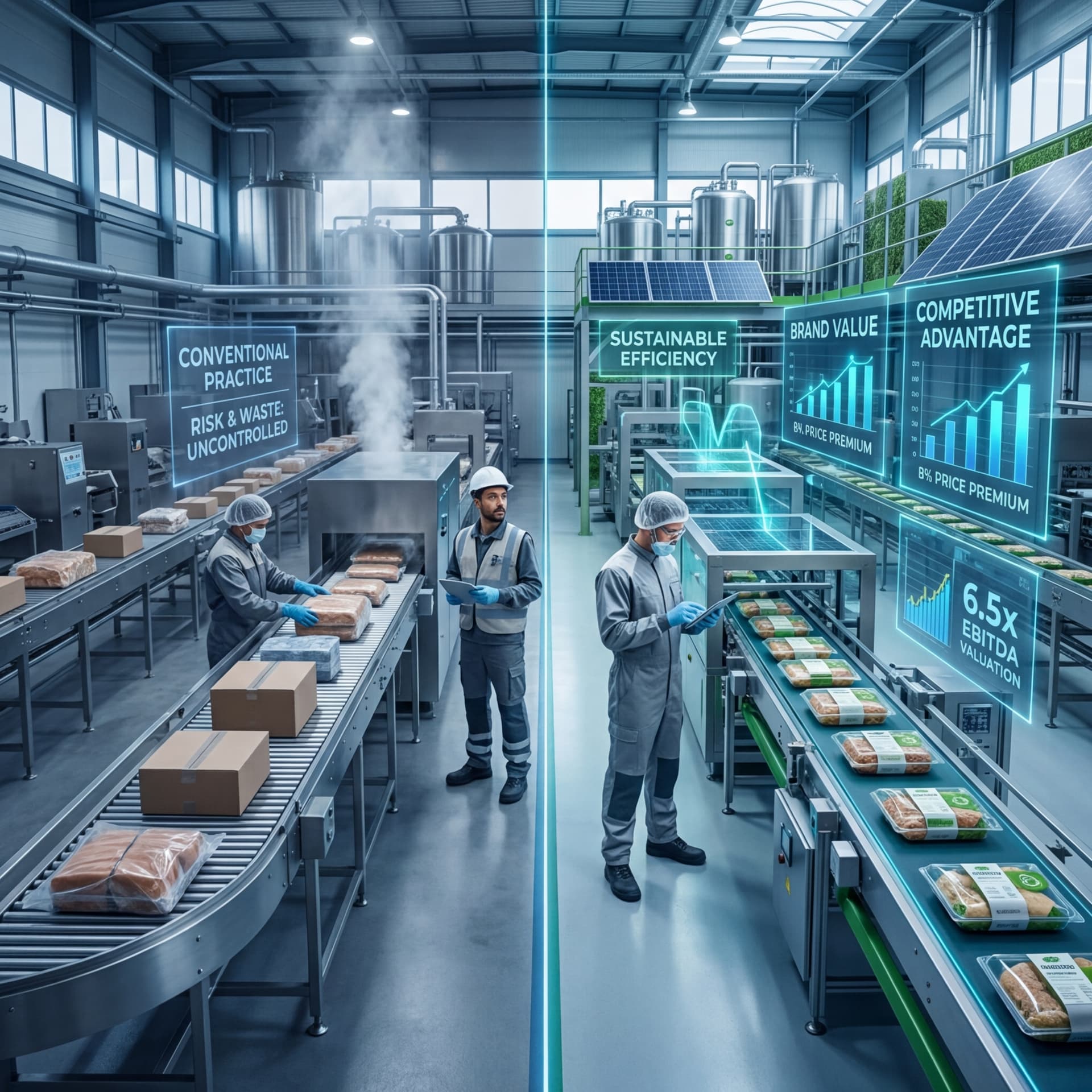
Two food manufacturers compete in the same market. Company A operates with minimal environmental controls, standard waste practices, conventional packaging. Company B has certified sustainable operations, waste reduction programs, eco-friendly packaging.
Company B commands 8% price premium from health-conscious consumers. PE valuations: Company A 5x EBITDA, Company B 6.5x EBITDA (30% premium).
Sustainability is business strategy, not just compliance requirement.
The ESG Framework
Environmental (E):
- Carbon footprint: Greenhouse gas emissions from operations
- Water usage: Consumption and discharge quality
- Waste management: Landfill diversion, recycling rates
- Packaging: Recyclability, material sourcing
- Energy: Renewable vs. fossil fuel mix
Social (S):
- Labor practices: Fair wages, safe working conditions
- Community engagement: Support for local communities
- Food safety: Product quality, traceability
- Diversity: Workforce representation, supplier diversity
- Employee development: Training, career growth
Governance (G):
- Board composition: Independence, expertise
- Executive compensation: Alignment with long-term value
- Risk management: Compliance, ethics programs
- Transparency: Disclosure, stakeholder communication
- Data security: Protection of customer/operational data
Sustainability Investment Roadmap
Year 1: Assessment and Quick Wins ($200K-$500K investment)
- Carbon footprint audit: Identify emission sources and reduction opportunities
- Quick wins: LED lighting upgrade ($50K), compressed air efficiency ($30K), waste reduction programs ($20K)
- Annual emissions reduction: 10-15%
- Annual cost savings: $100K-$150K
Year 2: Infrastructure and Process Improvements ($500K-$2M)
- Energy efficiency: HVAC optimization, equipment upgrades
- Water system: Recirculation systems, wastewater treatment
- Waste: Composting program, packaging redesign
- Annual emissions reduction: 20-30%
- Annual cost savings: $200K-$400K
Year 3: Strategic Transformation ($1M-$5M)
- Renewable energy: Solar installation, power purchase agreements
- Circular economy: Product take-back programs, refillable packaging
- Supply chain: Supplier sustainability standards
- Target: Carbon neutral operations or certified carbon offset program
Business Benefits
Brand and Market:
- Premium pricing: 5-10% price premium for certified sustainable products
- Customer loyalty: Sustainability-minded consumers show higher retention
- Market share: ESG focus increasingly influences purchasing decisions
Operational:
- Cost reduction: Energy efficiency, waste reduction = $200K-$500K annually
- Risk reduction: Emissions caps, water scarcity planning
- Supply chain: Supplier resilience through sustainability standards
Valuation:
- ESG integration supports premium valuation multiples
- 0.5-1.0x EBITDA multiple uplift (5-10% valuation premium)
- Attracts broader investor base (ESG-focused funds)
Certification and Credibility
Pursue third-party certifications providing credibility:
- B Corp Certification: Verified commitment to social/environmental standards
- Carbon Trust: Independent carbon footprint verification
- ScienceBasedTargets: Align emissions reduction to climate science
- Supply Chain Certification: Fair Trade, Rainforest Alliance for ingredients
Certifications cost $20K-$100K annually but provide customer/investor confidence.
ROI Example: $50M Manufacturer
3-Year Sustainability Investment: $2M
Benefits (Annual Year 3+):
- Energy/waste cost reduction: $350K
- Carbon offset/credit revenue: $50K
- Premium pricing (2% on 30% of revenue): $300K
- Working capital improvement (supply chain efficiency): $100K
- Total: $800K annual benefit
3-Year ROI: ($800K x 3) - $2M = $400K net benefit Plus: Valuation multiple improvement (0.5x x $7.5M EBITDA) = $3.75M additional enterprise value
For food manufacturing companies, integrating sustainability strategy creates operational cost savings, brand premium, and valuation uplift while positioning for regulatory compliance and climate resilience.