A supplement company extracts whey protein using basic ultrafiltration. Result: 50-60% protein content, high lactose (7-10%), grainy/gritty texture. Consumer complaints about digestibility. Premium sports nutrition market lost.
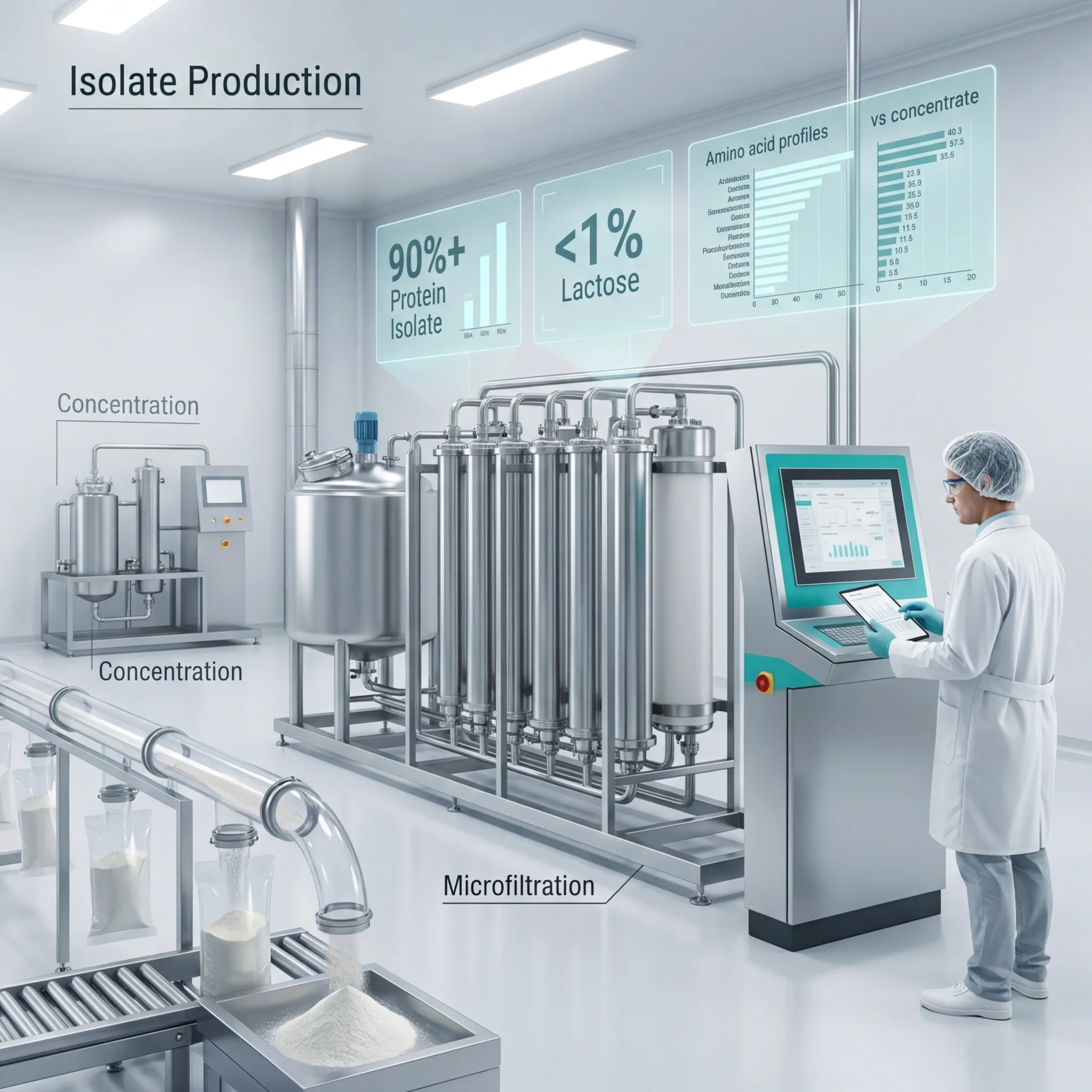
A modern processor applies advanced microfiltration + ion exchange chromatography. Result: 90%+ protein isolate, under 1% lactose, smooth texture, superior amino acid profile. Premium "whey protein isolate" market achieved. Price premium +200-300%.
Protein processing technology directly impacts purity, quality, and premium market positioning.
The Protein Processing Framework
Why Protein Isolation?
Protein concentration challenges:
- Lactose: Causes digestive upset (especially athletes)
- Moisture: Reduces stability, shelf-life
- Contaminants: Minerals, fat, carbohydrates
- Texture: Gritty/chalky if not refined
Protein Forms:
| Type | Protein % | Lactose % | Cost | Market |
|---|---|---|---|---|
| Concentrate | 70-80% | 7-10% | Low | Mass market |
| Isolate | 90%+ | under 1% | 3-5x | Premium |
| Hydrolysate | 90%+ | under 0.5% | 5-10x | Ultra-premium |
Processing Methods
Method 1: Ultrafiltration (Concentrate)
Process: Membrane filtration, large molecules pass, small molecules filtered
Equipment:
- Membrane pore size: 5-10 kDa (kilodaltons)
- Protein retained: Yes (over 5 kDa)
- Lactose passes: Partially (small molecule, some pass)
- Yield: 70-80% protein
Result:
- Protein: 70-80%
- Lactose: 7-10% (reduced from 45-50% original whey)
- Cost: Lower (one-step process)
- Application: Budget protein powders
Method 2: Microfiltration + Ion Exchange (Isolate)
Process: Two-stage advanced separation
Stage 1: Microfiltration
Equipment: Smaller pores (0.1-1 micrometers)
- Purpose: Further separate proteins from lactose
- Result: 85-90% protein, 2-3% lactose
Stage 2: Ion Exchange Chromatography
Principle: Charged proteins separate based on charge
How It Works:
- Resin column: Charged beads (positive or negative)
- pH adjustment: Protein charge manipulated
- Bind and elute: Proteins bind, then eluted separately
- Result: Ultra-pure protein (90%+), minimal contaminants
Ion Exchange Types:
- Cation exchange: Binds positive proteins
- Anion exchange: Binds negative proteins
- Mixed-mode: Multiple charges (more selective)
Efficacy:
| Contaminant | Before | After | Removal |
|---|---|---|---|
| Lactose | 8% | 0.5% | 94% |
| Fat | 1.5% | under 0.1% | 93% |
| Minerals | 3% | 0.5% | 83% |
| Protein | 70% | 95%+ | Concentrated |
Advanced Processing: Hydrolysate
Process: Partial protein breakdown (enzymatic hydrolysis)
Hydrolysis Method:
- Protease enzyme added to isolate
- Breaks peptide bonds (protein to smaller peptides)
- Results: Faster absorption, pre-digested form
- Cost: 5-10x concentrate (expensive)
Advantages:
- Absorption: 30-50% faster than isolate
- Amino acid: More bioavailable (pre-broken down)
- Digestion: Easier on sensitive stomachs
- Premium: Market commands +$15-30/lb
Amino Acid Profile (Quality Marker)
Key Amino Acids (Athletes):
| Amino Acid | Whey Protein | Function |
|---|---|---|
| Leucine | 11% | Trigger mTOR (muscle growth) |
| Isoleucine | 7% | BCAA (energy, recovery) |
| Valine | 5.5% | BCAA (muscle protection) |
| BCAA total | 23.5% | Most important for athletes |
| Glutamine | 7.2% | Immune, intestinal health |
Whey Advantage: Naturally high in BCAAs (branched-chain amino acids)
Plant-Based Comparison:
| Source | Protein % | BCAA % | Digestibility |
|---|---|---|---|
| Whey isolate | 95% | 23.5% | 95%+ |
| Pea protein | 90% | 17% | 90% |
| Rice protein | 88% | 16% | 88% |
| Soy protein | 92% | 18% | 95% |
Quality Standards (Premium Isolate)
Specification Sheet Example:
- Protein: over 90% (target)
- Lactose: under 1% (low lactose)
- Fat: under 1% (low fat)
- Calcium: 400-600 mg/serving
- Sodium: under 250 mg/serving
- Cholesterol: under 10 mg/serving
- Amino acid profile: PDCAAS 1.0 (highest)
Cost-Benefit Analysis
| Factor | Concentrate | Isolate |
|---|---|---|
| Raw whey cost | $2-3/lb | $2-3/lb |
| Processing cost | $2-3/lb | $8-12/lb |
| Total cost/lb | $4-6 | $10-15 |
| Retail price | $8-12/lb | $20-30/lb |
| Margin | 2x cost | 2x cost (higher $ absolute) |
| Market | Budget segment | Premium/sports |
Equipment Investment:
- Ultrafiltration: $300-800K
- Ion exchange system: $500-1.5M
- Total capital: $800K-2.3M
- Throughput: 1,000-5,000 lbs/day
- Payback: 3-5 years (high volume)
Regulatory Status
FDA Compliance:
- Protein concentrates: GRAS (Generally Recognized As Safe)
- Isolates: GRAS (well-established)
- Hydrolysates: GRAS (approved)
- Labeling: "Whey Protein Isolate" allowed (if over 90% protein)
- Claims: Can declare amino acid profile (verified)
For protein processors, advanced isolation technology enables premium sports nutrition market positioning with 200-300% price premium.