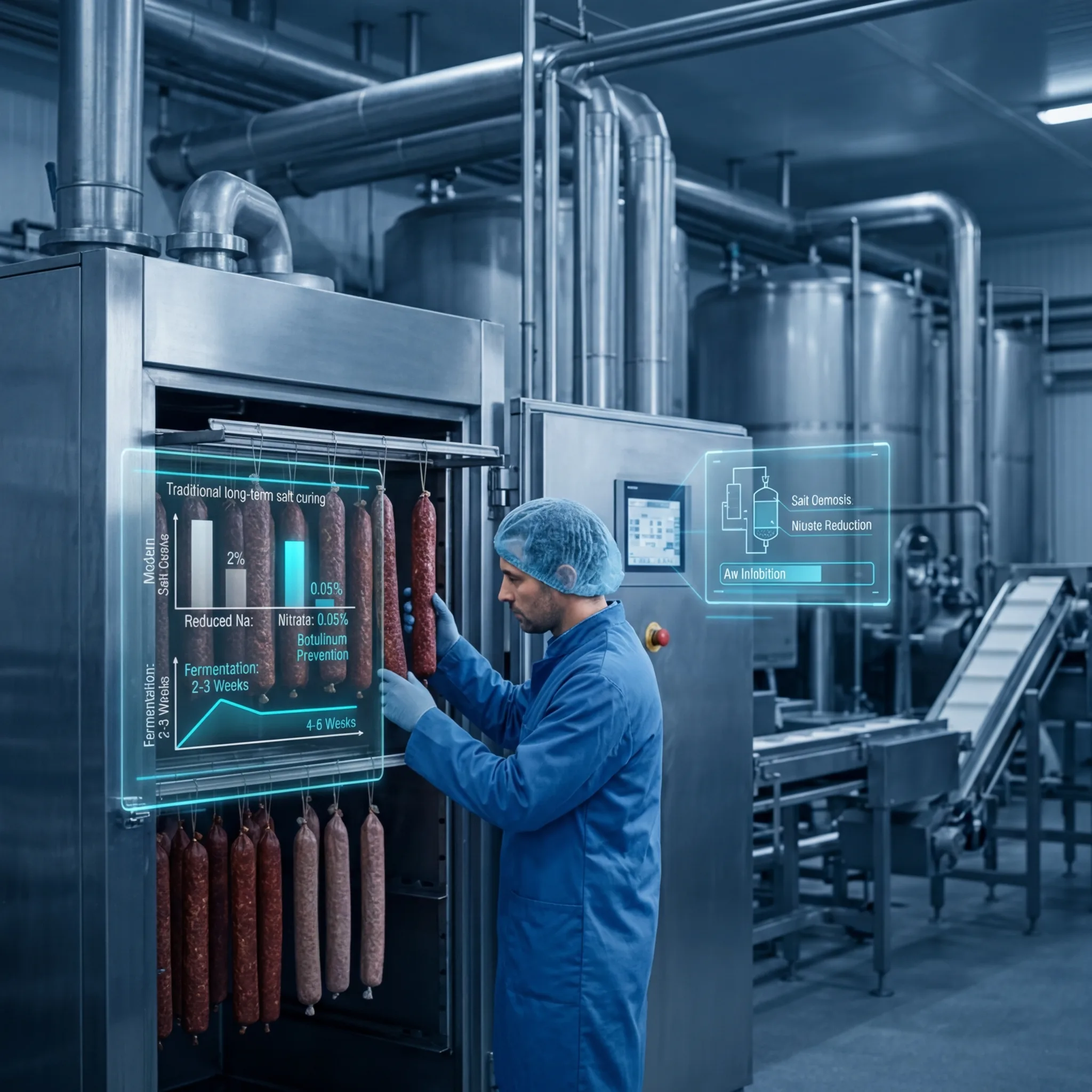
A meat processor uses traditional salt curing methods (high sodium, long fermentation time). Result: Very salty taste, 4-6 week fermentation duration, limited consumer appeal due to sodium concerns. Product shelf life extended but taste compromised.
A modern processor uses optimized cure formulation: Salt (2%), nitrate (0.05%), dextrose (0.5%), fermentation bacteria (Lactobacillus). Result: Reduced sodium content, faster fermentation (2-3 weeks), improved flavor profile, food safety validation confirmed (Clostridium botulinum prevention). Premium natural cured meat market achieved. Price premium +$2-3/lb realized.
Meat curing optimization directly impacts food safety, flavor, and premium market positioning.
The Meat Curing Framework
Curing Mechanisms:
Meat preservation through multiple preservation hurdles:
-
Salt Effect: Draws moisture, inhibits pathogenic bacteria
- Osmotic stress: Water leaves cells
- Result: Reduced water activity (Aw), microbial inhibition
-
Nitrate/Nitrite Effect: Prevents anaerobic pathogens
- Converts to nitrite: Inhibits Clostridium botulinum (botulism risk)
- Color: Develops characteristic pink/red color
- Benefit: Critical food safety protection
-
Fermentation Effect: Lactobacillus produces lactic acid
- pH drops: 6.8 to 4.0-4.5 (acidic environment)
- Result: Additional pathogen inhibition
- Flavor: Complex, tangy taste develops
-
Smoke (Optional): Adds antimicrobial compounds
- Wood smoke: Contains phenols, aldehydes (bacteriostatic)
- Effect: Additional surface protection
- Flavor: Distinctive smoky notes (premium appeal)
Curing Process
Step 1: Salt Application (Dry Curing)
Method: Apply salt mixture to meat surface
- Salt: 2-3% of meat weight (reduced from 5-8% traditional)
- Nitrate: 0.05% (strictly controlled, food safety)
- Sugar: 0.5% (dextrose, balances salt, feeds fermentation)
- Spices: Optional (black pepper, garlic, juniper)
Duration: 5-7 days (in cool environment, 4 degrees C)
Step 2: Fermentation
Equipment: Controlled fermentation chamber
- Temperature: 18-22 degrees C (optimal for Lactobacillus)
- Humidity: 80-85% (prevents excessive drying)
- Time: 2-3 weeks (modern optimized vs. 4-6 weeks traditional)
- Monitoring: pH drop verification (target under 4.8 final)
Bacterial Culture:
- Starter culture: Lactobacillus plantarum, L. pentosus
- Inoculation: 10^6-10^7 CFU/g
- Result: Rapid acid production, flavor development
Step 3: Drying (If Applicable)
Purpose: Final moisture reduction, texture firming
- Temperature: 15-18 degrees C
- Humidity: 75-80% (gradual humidity drop)
- Time: 2-4 weeks (depending on product size)
- Result: Final moisture 30-35% (shelf-stable)
Food Safety Validation
Critical Parameters:
| Parameter | Target | Purpose | Validation |
|---|---|---|---|
| Final pH | under 4.8 | Acid preservation | Measure pH of finished product |
| Water activity (Aw) | under 0.95 | Moisture control | Aw meter measurement |
| Nitrite level | 0.02-0.05% | Botulinum prevention | HPLC analysis |
| Time/Temp | Documented | Process validation | Time-temperature recording |
Botulism Prevention:
Clostridium botulinum toxin production prevented by:
- Acidification (pH under 4.8): Bacteria stop toxin production
- Salt (over 2%): Osmotic stress inhibits growth
- Nitrite (over 0.02%): Direct inhibition
- Combined: Multiple hurdles ensure safety
Required Testing:
- Botulinum toxin test: Validation study (initially)
- pH verification: Every batch
- Water activity: Spot checks (monthly)
- Microbial testing: Salmonella, Listeria screening
Traditional vs. Optimized Comparison
| Parameter | Traditional | Optimized |
|---|---|---|
| Salt level | 5-8% | 2% (reduced 60-75%) |
| Fermentation time | 4-6 weeks | 2-3 weeks (50% faster) |
| Nitrate | 0.1-0.2% | 0.05% (controlled minimum) |
| Taste | Very salty | Balanced, complex |
| Sodium content | High (consumer concern) | Reduced (health appeal) |
| Cost | Lower | Higher (controlled process) |
| Premium pricing | Modest | +$2-3/lb possible |
Cost-Benefit Analysis
| Factor | Impact |
|---|---|
| Fermentation chamber | $20-50K |
| Starter culture | $100-200/batch |
| Testing/validation | $5-10K initial |
| Total capital | $25-60K |
| Sodium reduction | 60-75% (health benefit) |
| Faster production | 50% time reduction |
| Premium positioning | Natural, reduced-sodium market |
| Price premium | +$2-3/lb achievable |
| ROI | 1-2 years |
For meat processors, optimized curing with controlled fermentation enables premium natural meat positioning and reduced sodium appeal.