A vegetable processor makes sauerkraut with inconsistent sourness (sometimes bland, sometimes too sour, sometimes off-flavor). Result: Consumer complaints, returns high, shelf-life variable, premium market lost.
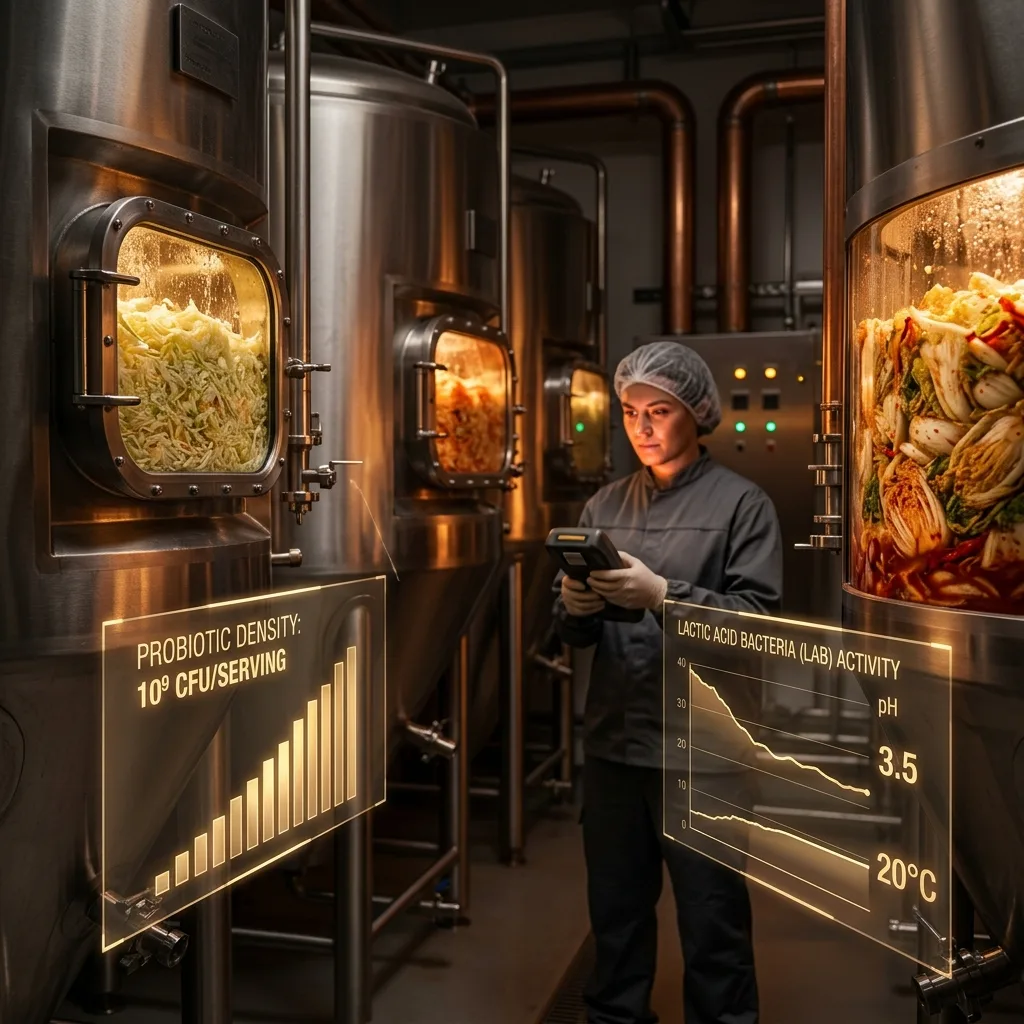
A controlled fermentation facility implements: Starter cultures (Lactobacillus plantarum), precise temperature control (18-22 degrees C), real-time pH monitoring (target 3.0-3.5). Result: Consistent tangy flavor every batch, probiotic count guaranteed (10^9 CFU/serving, health claim threshold), premium probiotic market achieved, consumer loyalty +80%.
Fermented vegetable processing directly impacts flavor consistency and probiotic potency.
The Fermented Vegetable Framework
Fermentation Science:
Lactic acid fermentation (anaerobic):
- Starter: Lactic acid bacteria (LAB) cultures
- Substrate: Vegetable sugars (glucose, fructose)
- Product: Lactic acid + CO2
- pH drop: 6.5 to 3.0-3.5 (naturally preserved)
Key LAB Species:
| Species | Role | Phase |
|---|---|---|
| Lactobacillus plantarum | Dominant acid producer | Throughout |
| Leuconostoc mesenteroides | Early fermentation, flavor | Initial (days 1-7) |
| Pediococcus pentosaceus | Secondary, texture | Late (days 7+) |
Probiotic Viability:
Living cultures benefit health:
- CFU count: Colony-forming units (living cells)
- Target: 10^9 CFU/serving (1 billion, health standard)
- Viability: Decreases over shelf-life
- Temperature: Cold storage maintains viability
Fermentation Process
Step 1: Vegetable Preparation
Purpose: Prepare substrate for fermentation
- Clean: Wash vegetables thoroughly
- Cut: Size appropriate for fermentation (1-2 inch pieces)
- Weight: Measure precise quantity (for consistency)
Step 2: Salt Addition (Brining)
Purpose: Osmotic stress, selective pressure for LAB
- Salt concentration: 2-3% by weight (industry standard)
- Function: Halophilic LAB thrives, undesirable microbes inhibited
- Water: Make brine (dissolve salt in water)
- Immersion: Submerge vegetables in brine
Example (1 kg cabbage):
- Water: 500 mL (60% of weight)
- Salt: 2.5% x 500 g total = 12.5 g salt
- Result: Brine covers vegetables completely (anaerobic)
Step 3: Inoculation (Optional)
Purpose: Ensure consistent fermentation
- Starter culture: LAB culture (Lactobacillus plantarum)
- Inoculation rate: 10^6-10^7 CFU/mL
- Benefit: Faster fermentation, consistent flavor
- Alternative: Natural fermentation (slower, variable)
Step 4: Fermentation (1-4 weeks)
Conditions:
- Temperature: 18-22 degrees C optimal (68-72 degrees F)
- Anaerobic: Submerged, sealed container
- Monitoring: Daily pH measurement (target 3.0-3.5 final)
Timeline:
| Day | pH | Bacterial Activity | Sensory |
|---|---|---|---|
| 0 | 6.5 | Lag phase (adaptation) | Raw vegetable |
| 3-5 | 5.5 | Exponential growth begins | Slight sour |
| 7-10 | 4.0 | Peak LAB activity | Moderate sour |
| 14-21 | 3.0-3.5 | Stationary phase | Full sour, ready |
Final pH: 3.0-3.5 (natural preservation, shelf-stable)
Step 5: Finishing and Storage
Purpose: Stabilize fermented product
- Cool: Room temperature to 4 degrees C (slow down fermentation)
- Pack: Transfer to jars with brine
- Store: Refrigerate (4 degrees C, slows fermentation further)
- Shelf-life: 6-12 months refrigerated (probiotics viable)
Probiotic Quality Verification
Testing 1: CFU Count (Viability)
Method: Plate counting
- Culture: LAB colonies on growth medium
- Count: Viable cells only
- Target: 10^9 CFU/serving (health claim)
- Cost: $50-100/test
Testing 2: pH Verification
Method: pH meter
- Measurement: Acidity level
- Target: 3.0-3.5 (natural preservation)
- Frequency: Every batch
Testing 3: Flavor Profiling
Method: Trained sensory panel
- Attributes: Sourness, saltiness, overall flavor
- Consistency: Batch-to-batch comparison
- Acceptance: Consumer preference threshold
Cost-Benefit Analysis
| Factor | Cost/Impact |
|---|---|
| Fermentation equipment | $50-150K (vessels, climate control) |
| Starter culture | $100-300/batch |
| Testing (CFU count) | $50-100/batch |
| Labor | +20% monitoring (daily pH checks) |
| Shelf-life | 6-12 months (improved) |
| Premium market | +$3-5/jar possible |
| Consumer loyalty | +80% repeat purchase (probiotics) |
| ROI | 2-3 years typical |
For fermentation processors, controlled LAB fermentation enables probiotic market and premium positioning.