A cafe brews coffee with inconsistent technique. Result: Some cups bitter (over-extracted), some weak (under-extracted). Customer complaints. Regulars switch to competitors.
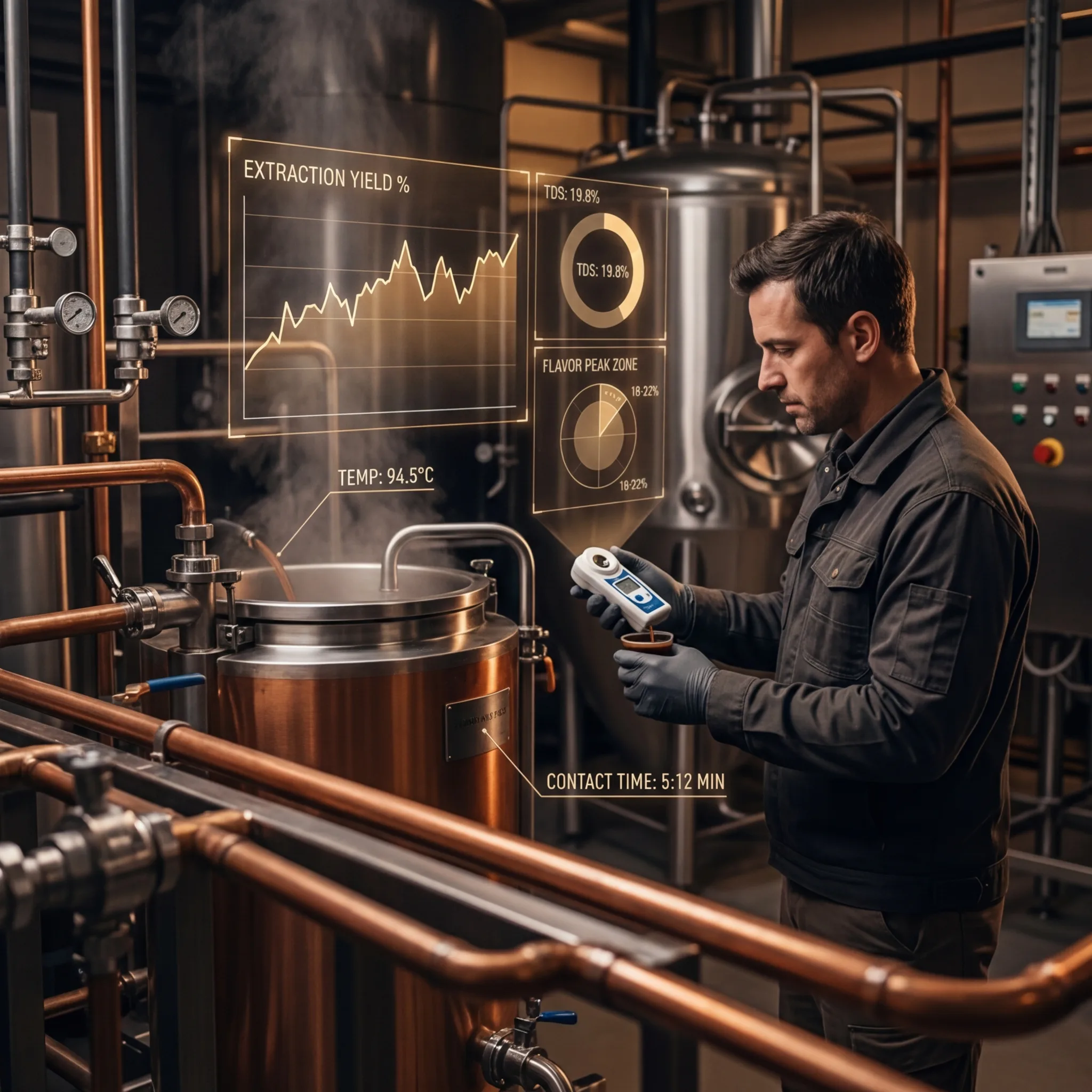
A specialty cafe implements standardized extraction: Measure water temperature (93-96 degrees C), grind size consistency (medium), contact time (4-6 minutes), verify extraction (18-22% TDS). Result: Consistent flavor every cup. Customers praise quality. Premium pricing justified. Repeat purchase rate +60%.
Coffee extraction precision directly impacts flavor and customer loyalty.
The Coffee Extraction Framework
Extraction Science:
Coffee soluble solids (flavor compounds, oils, sugars) dissolve in hot water
- Under-extraction (under 18%): Weak, sour taste
- Optimal (18-22%): Balanced, full flavor
- Over-extraction (over 22%): Bitter, astringent
TDS (Total Dissolved Solids):
Percentage of coffee solids dissolved in water
| TDS Level | Extraction Status | Flavor Profile | Examples |
|---|---|---|---|
| under 15% | Under-extracted | Weak, sour, watery | Poor brewing |
| 18-22% | Optimal | Balanced, full, complex | Specialty coffee |
| over 25% | Over-extracted | Bitter, astringent, harsh | Poor brewing |
Brewing Variables
Variable 1: Water Temperature
Target: 93-96 degrees C (200-205 degrees F)
- Too hot (over 96 degrees C): Extracts bitterness rapidly
- Too cool (under 90 degrees C): Slow extraction, sour taste
- Optimal: 93-96 degrees C balances speed and flavor
Equipment: Thermometer or temperature-controlled brewer
- Monitor: Verify temperature at brew start
- Action: Adjust heat if out of range
Variable 2: Grind Size
Impact: Affects water contact and extraction speed
| Grind Size | Particles | Contact | Extraction Speed | Optimal For |
|---|---|---|---|---|
| Very coarse | Large | Low | Very slow | Cold brew (12+ hrs) |
| Coarse | Medium-large | Medium | Slow | French press |
| Medium | Medium | Good | Moderate | Drip coffee |
| Fine | Small | High | Fast | Espresso |
| Very fine | Very small | Very high | Very fast | Turkish |
Consistency Critical: Uniformity ensures consistent extraction
Variable 3: Contact Time
Duration water contacts coffee grounds
| Method | Contact Time | Temperature | Extraction |
|---|---|---|---|
| Espresso | 25-30 seconds | 93 degrees C, 9 bar pressure | 25-30% (short, intense) |
| Drip coffee | 4-6 minutes | 93 degrees C gravity | 18-22% (optimal) |
| French press | 4-5 minutes | 93 degrees C immersion | 20-22% (full-bodied) |
| Cold brew | 12-24 hours | 4 degrees C slow diffusion | 18-22% (smooth) |
Optimal for Most Methods: 4-6 minutes (drip, immersion)
Variable 4: Coffee-to-Water Ratio
Dose: Grams of coffee per volume of water
| Ratio | Grams/200mL | Flavor | Strength |
|---|---|---|---|
| Light | 10g | Weak, thin | Delicate |
| Standard | 12-14g | Balanced | Medium |
| Strong | 16-18g | Bold, intense | Full-bodied |
Consistency: Measure precisely (+/-0.5g tolerance)
Extraction Measurement
Method: TDS Measurement
Equipment: Refractometer
- Cost: $200-1,000
- Precision: +/-0.5% TDS
- Time: 30 seconds per measurement
- Process: Apply drop of coffee sample, read percentage
Standard Operating Procedure:
- Brew coffee under target conditions
- Cool sample to room temperature
- Apply to refractometer
- Read TDS percentage
- Compare to target (18-22%)
- Adjust variables if needed
Target by Brewing Method:
- Espresso: 25-30% TDS (intentionally high, small volume)
- Drip coffee: 18-22% TDS (optimal balance)
- French press: 20-22% TDS (full immersion)
- Cold brew: 18-22% TDS (long contact time)
Flavor Development
Extraction Progression (Over Time):
Timing shows what dissolves when:
| Time | Compounds | Flavor Impact |
|---|---|---|
| 0-30 sec | Solubles, acids | Initial brightness |
| 30-2 min | Sugars, aromatics | Sweet, balanced |
| 2-4 min | Tannins, oils | Full-bodied, complexity |
| 4-6 min | Last solubles | Complete extraction |
| over 6 min | Bitters, harsh | Over-extraction, astringency |
Implication: Stop brewing at 4-6 minutes (before bitterness)
Quality Control
Daily Validation:
- Brew reference coffee
- Measure TDS (target 18-22%)
- Taste (describe flavor)
- Compare to standard
- Adjust variables if needed
- Document results
Variance Causes:
- Grind size inconsistency: Major impact
- Water temperature drift: Significant
- Contact time variation: Moderate
- Ratio error: Moderate
Cost-Benefit
| Factor | Cost/Impact |
|---|---|
| Refractometer | $200-1,000 |
| Thermometer | $20-100 |
| Scale | $50-300 |
| Grinder | $100-2,000 (burr quality critical) |
| Total investment | $370-3,400 |
| Flavor consistency | 50% to 95% (on-spec) |
| Customer satisfaction | +60% repeat purchase |
| Premium pricing | +$0.50-1.00/cup possible |
| ROI | under 3 months (rapid) |
For coffee operators, extraction optimization ensures flavor consistency and premium customer loyalty.