A processed meat company uses synthetic preservatives (sodium nitrite). Result: "Artificial preservatives" claim harms brand. Consumer pressure. Social media criticism. Premium market access limited.
A modern company replaces nitrite with nisin (natural bacteriocin). Result: "No artificial preservatives" claim enabled. Clean label achieved. Premium market positioning. Consumer trust increased. Price premium realized (+$3-5/package).
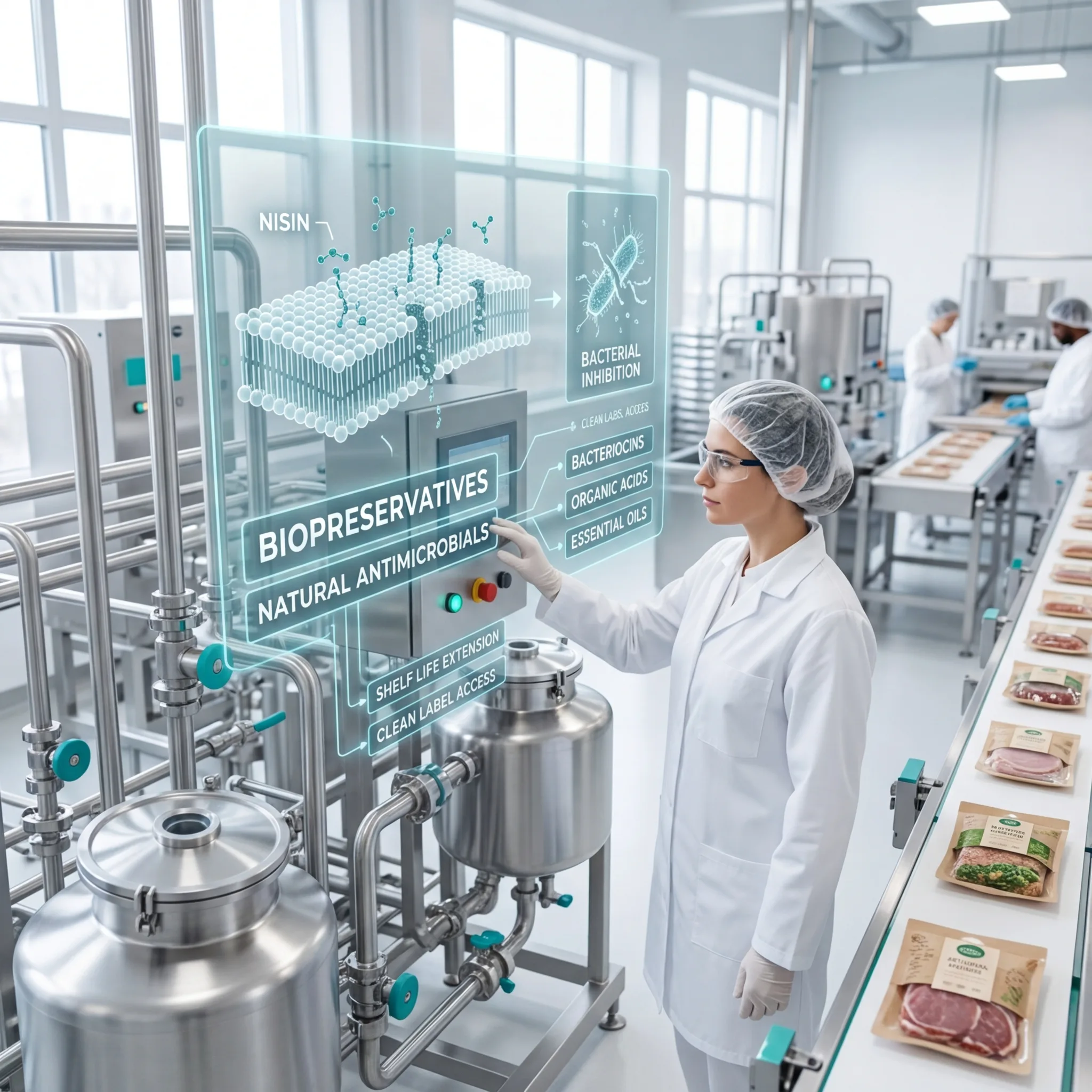
Biopreservatives enable clean-label positioning with effective food safety.
The Biopreservative Framework
Types of Biopreservatives:
- Bacteriocins: Antimicrobial peptides from beneficial bacteria
- Organic Acids: Weak acids inhibiting pathogen growth
- Essential Oils: Plant-derived antimicrobials
- Lysozyme: Enzyme from egg whites
- Natamycin: Antifungal from fermentation
Key Advantage:
Natural origin = Clean label appeal
- GRAS status (Generally Recognized As Safe)
- Consumer perception positive
- Premium pricing justified
Bacteriocin: Nisin
Source: Lactococcus lactis (lactic acid bacteria)
FDA Status: Approved since 1988 (GRAS)
Mechanism:
Nisin punctures bacterial cell membranes
- Creates pores in cell walls
- Cell contents leak out
- Cell death (irreversible)
Effectiveness:
| Pathogen | Log Reduction | Application |
|---|---|---|
| Listeria | 4-5 log | Critical |
| Clostridium botulinum | 3-4 log | Important |
| Bacillus | 2-3 log | Important |
| Gram-negative bacteria | under 1 log | Limited |
Note: More effective against gram-positive bacteria (Listeria, Botulinum, Staph)
Typical Applications:
- Processed meat (ham, sausage, bacon)
- Dairy products (cheese, yogurt)
- Canned foods
- Salad dressings
- Shelf-stable foods
Concentration: 0.01-0.1% typical
Cost: $5-15 per kg nisin (vs. $0.50-1 per kg synthetic preservatives)
Lysozyme
Source: Egg whites (naturally present)
Mechanism:
Breaks bacterial cell wall (peptidoglycan)
- Weakens cell wall structure
- Osmotic lysis (bursting)
- Particularly effective: Gram-positive bacteria, some spoilage organisms
Effectiveness:
- Gram-positive bacteria: 2-3 log reduction
- Gram-negative: under 1 log reduction
- Molds: 1-2 log reduction
Applications:
- Wine preservation (prevent spoilage)
- Cheese preservation
- Seafood preservation
- Egg products
Concentration: 0.01-0.1%
Cost: $3-10 per kg (moderately expensive)
Natamycin (Antifungal)
Source: Streptomyces natamyceticus (microorganism)
Mechanism:
Disrupts fungal cell membrane
- Binds to ergosterol (fungal cell component)
- Membrane disintegration
- Particularly effective: Molds, yeasts
Effectiveness:
- Molds: 4-5 log reduction (excellent)
- Yeasts: 3-4 log reduction
- Bacteria: Minimal effect
Applications:
- Surface treatment (cheese rind protection)
- Baked goods (mold prevention)
- Jam/preserves (mold inhibition)
- Wine/beverage surface protection
Concentration: 0.01-0.05% (very low, highly potent)
Cost: $20-50 per kg (most expensive)
Organic Acids (Lactic, Acetic)
Source: Fermentation (lactic acid bacteria, acetic acid bacteria)
Mechanism:
Low pH + undissociated acid penetrate cell membranes
- Acidify cell interior
- Denature proteins
- Inhibit enzyme systems
Effectiveness:
- Salmonella: 2-3 log reduction
- E. coli: 2-3 log reduction
- Listeria: 1-2 log reduction
- Molds: 2-3 log reduction
Applications:
- Fermented products (naturally produced)
- Meat marinades
- Dressings and sauces
- Acidified vegetables
Concentration: pH under 4.6 typical
Cost: Under $0.50 per kg (least expensive, often by-product)
Efficacy Comparison
| Biopreservative | Gram-Positive | Gram-Negative | Molds | Cost | Clean Label |
|---|---|---|---|---|---|
| Nisin | Excellent | Poor | Fair | High | Yes |
| Lysozyme | Good | Poor | Good | Moderate | Yes |
| Natamycin | Fair | Poor | Excellent | High | Yes |
| Organic acids | Good | Fair | Good | Low | Yes |
Regulatory Considerations
FDA Status:
- Nisin: GRAS (21 CFR 184.1538)
- Lysozyme: GRAS (21 CFR 184.1407)
- Natamycin: Approved food additive (21 CFR 172.265)
Labeling:
- Must list ingredient name
- Consumer acceptance high (natural source evident)
- Marketing appeal: "Natural preservation," "No artificial preservatives"
Cost-Benefit
| Factor | Impact |
|---|---|
| Biopreservative cost | +$0.30-0.50 per unit |
| Premium pricing | +$2-5 per unit ("clean label") |
| Net benefit | +$1.50-4.70 per unit |
| Equipment cost | Minimal (standard mixing) |
| ROI | Very high (premium positioning) |
For clean-label focused manufacturers, biopreservatives enable natural preservation with premium market positioning.